Wednesday, February 29, 2012
I've moved!
I've moved to a new site: mwgerard.com
But don't worry -- this site will remain open and all of these posts and comments are on the new site too.
All of my writings and posts, including book reviews, will be housed at the new site.
Please stop by!
Monday, February 6, 2012
REVIEW: THE COINCIDENCE ENGINE by Sam Leith
If HG Wells, Dave Barry and Jasper Fforde had a child, it would be Sam Leith. Refreshingly original and smart, this novel follows multiple points of view ranging from a lovesick youth, a thug with no ability to judge consequences, a mastermind with a cutting sense of humor and an agent with a troubled past.
It begins with the unlikely incident of a hurricane assembling an airplane out of scrap metal. This tips off the secret agency, the Department of the Extremely Improbable, that something is afoot. It seems a coincidence engine, a machine that bends the psychics of chance and will, is on the move and a number of forces want to capture it. The hunt is on, though no one quite knows what they are looking for. It's an adventure for the well-drawn characters as well as the reader.
Part steampunk, part road trip, part comedy of errors, The Coincidence Engine is entirely readable. The language is rich and swirling and, thankfully, very British. Too often American publications include a stripping of dialectic idioms. I love how eccentric the writing is allowed to be.
Here's an example:
"Herbert Owse's Antiquarian Omnium Gatherum stood on Burleigh Street, and was manned by a rubicund numismatist with a wild beard and a liking for checking shirts and moleskin waistcoats. His socks, though this is of scant relevance here, were held up with suspenders. His name was not Herbert Owse."
Leith finds an admirable balance between silliness and poignancy in his debut novel. Witty, urbane and comic, I look forward to reading Sam Leith in the future.
Many thanks to Rachel and the folks at Crown Publishing for the review copy.
_________________________
Hardcover | February 07, 2012 | Pages: 288 | ISBN: 978-0-307-71642-2
Friday, January 27, 2012
REVIEW: THE BLACKHOPE ENIGMA by Teresa Flavin
This was another young adult (I'd place this in the 9-13 year old age range) title that made its way into my review pile. Something about its description, and yes, its cover, kept tempting me.
It centers around a group of young teens who are assigned to do a historical art project. Two of the class pick the same Renaissance artist, il Corvo, and are studying his work at Blackhope Tower when the adventure begins. The heroine's step-brother accidentally finds the secret to the labyrinth mosaic and ends up inside the painting. Sunni goes in after him, along with her classmate, followed closely by an art historian. The group encounters enchanted mazes, hidden layers, puzzles, maps and coded languages. They must find a way out of the painting, and protect il Corvo's secret.
It's fairly adventurous, with plenty of captures and escapes. But there is no gore or intense violence so it is still age appropriate. The characters learn and discuss a great deal about art and therefore impart a great deal on to the reader. One will learn about underpainting, sketches, murals, chiaroscuro, and other techniques.
On the other hand, some of the "intrigue" is a bit convoluted. Crosses, double-crossed, disappearances, etc. almost need a scorecard to keep track of, and some don't have a clear motive. I wondered if it might be difficult for a young person to follow.
It's certainly a much better book for young people to read than most of the vampire tripe out there. At least with this title they can see characters which determination, spunk and intelligence.
Many thanks to the folks at Candlewick Press for the review copy.
___________________________
ISBN-10 / ISBN-13: 0763656941 / 9780763656942
on sale date: 08/2011
type/format: Hard Cover
# of pages/size: 304 / 5 1/8" x 7 5/8"
Many thanks to the folks at Candlewick Press for the review copy.
___________________________
ISBN-10 / ISBN-13: 0763656941 / 9780763656942
on sale date: 08/2011
type/format: Hard Cover
# of pages/size: 304 / 5 1/8" x 7 5/8"
Wednesday, January 25, 2012
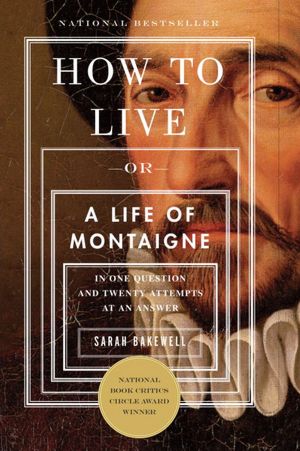
REVIEW: HOW TO LIVE, OR, THE LIFE OF MONTAIGNE by Sarah Bakewell
I must say, I prefer biographies of this sort. It's far too arrogant for a biographer to think they can just begin at the beginning and go from there. Bakewell instead takes a more meaningful approach to a thinker, philosopher, and writer four-hundred years and a language removed. She drops in, like a neighbor stops in for a chat. Each chapter approaches the question (his won quest), "How to Live?" with an answer buried in Montaigne's own writing. Bakewell then expands up this idea by highlighting a trait or era in Montaigne's life.
Michel Eyquem de Montaigne was born in 1533. In 1570, he "dies" when thrown from a horse -- or so was thought. He pulls through and the experience changes him forever. He begins to look at life from outside of himself, and thus understand himself better. His stream of consciousness essays are the earliest of their kind. In French, the word essayer means "to try." In each of his essays, Montaigne tried out different ideas, trains of thought.
| Montaigne's Chateau |
Of course, it may not seem that difficult to be introspective with a house like that and an entire tower as a library. But Montaigne was also a public servant and a working landowner. It seems, based on his papers, he took his position in society very seriously and subscribed to noblese oblige.
This book is an excellent introduction to Montaigne, especially since his writings can be a bit overwhelming at first. It should also be a boon for Monataigne enthusiasts. Bakewell sheds light on this influential thinker, places him among the ranks of Aristotle, and Descartes, while at the same time humanizing him. With this book, she proves that philosophy doesn't have to be boring, dusty or out of reach.
Many thanks to the folks at Other Press for the review copy.
________________________________________
Released October 19, 2010 | Hardcover | 400 pages | ISBN: 978-1-59051-425-2
Wednesday, January 18, 2012
REVIEW: THE DOLL by Daphne du Maurier
The Lost Short Stories
These tales written very early in her career (1926-1932), long before Rebecca. Some were published much later, some not at all. It's fascinating to see the writer she would become taking shape in these early stories. Sometimes they style is slightly more simplistic as though they were first drafts or rough sketches. What always comes through, however, is her exploration of the human psyche -- both of her characters and the reader. She reveals only just so much, leaving the reader to fill in the blanks. But rest assured, we land just where du Maurier leads us. Somehow we now the darkened path, the frightening staircase will lead us down but we can't stop reading.
| du Maurier on the stairs of her beloved home, Menabilly |
Another theme that du Maurier employs in her stories that transfers to the reader is a sense of emptiness. The Doll tracks the slow descent to madness through "found" pages of a diary. A man chases an elusive woman, named Rebecca (naturally). She is described as cold, heartless vacant. To the narrator she is a doll. Perfection is in construction but absent of feeling or soul. But Rebecca's fickle nature drives the narrator mad. And Now To God The Father displays her distinct distrust of organized religion. Frustration reads like a novice's attempt at an O. Henry ironic fable. Tame Cat is entirely unsettling just like we expect du Maurier should be. By writing from the point-of-view of an incredibly naive narrator, the reader is able to withhold judgement until the awful truth cannot be denied. Nothing Hurts For Long are the interior thoughts of a two-faced, fair weather "friend." Weekend is bitingly realistic and darkly funny. Within a few short pages, she has traced the evolution of a relationship, albeit cynically.
All of the stories poke at our idea of normal, challenging what is comfortable. This is unsurprising, knowing the little we do about her unconventional upbringing. Her grandfather was George du Maurier, author of the wildly popular Trilby. Daphne was also cousin to the Llewelyn Davies boys, who ultimately inspired J. M. Barrie to write Peter Pan. Psychologically unnerving and yet somehow of a parallel universe, The Doll will resonate with fans of Jamaica Inn, Don't Look Now (aka Not After Midnight), Rebecca, and The Scapegoat.
Also read a great article in The Telegraph.
Many thanks to the folks at William Morrow / HarperCollins for the review copy.
____________________________
ISBN: 9780062080349
Imprint: William Morrow Paperbacks
On Sale: 11/22/2011
Format: Trade PB
Trimsize: 5 5/16 x 8
Pages: 224; $14.99
Ages: 18 and Up
Imprint: William Morrow Paperbacks
On Sale: 11/22/2011
Format: Trade PB
Trimsize: 5 5/16 x 8
Pages: 224; $14.99
Ages: 18 and Up
Friday, January 6, 2012
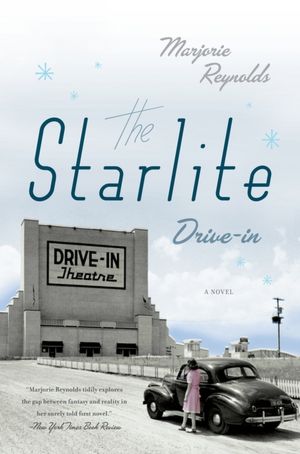
REVIEW: THE STARLITE DRIVE-IN by Marjorie Reynolds
Set in 1950s rural Indiana, this debut novel is told from the first-person by Callie Anne, primarily in flash back. Now an adult, she is drawn back to the summer she turned 11. Her memories are recalled in the mindset of a child who now has an adult perspective.
Her father is the manager and projectionist at the drive-in theatre -- king of his small, dusty domain. Her mother is a agoraphobic, but determined homemaker. Their predictable if dreary lives are turned upside down when Memphis is hired to help at the theatre. Officially, he is there to do odd jobs like repair the concessions stand and repaint outbuildings. Unofficially, he befriends Callie and her mother. It quickly becomes clear to him that their living situation is an abusive and repressive one and he vows to help them escape.
One thing Reynolds is very adept at conveying is a complicated relationship. Callie Anne, still a young girl, looks up to her father, despite his temper. The two spend hours in the projection booth, watching reels and reciting lines from their favorite movies. Yet she finds his tyranny stifling. Callie Anne is as much of a parent to her mother as her mother is to her. She keeps a lid on things, for the most part, and does all the things in the outside world that her mother can't. Memphis complicates this balance, but there is no going back once he and her mother fall in love. And despite his horrid actions, the reader can't help but feel sympathetic towards Callie Anne's father. He is losing his family.
At the outset, the story reminded me a bit of To Kill A Mockingbird. A youthful narrator making observations on her own past from a more mature perspective. A rural setting. Complicated families. But about halfway in, it devolved into a soap opera. Situations become repetitive, until all that's left is "will they or won't they?". Those who like coming-of-age stories with a gossipy edge should read The Starlite Drive-In.
Many thanks to the folks at HarperCollins for the review copy.
_________________________
ISBN: 9780062092649; ISBN10: 0062092642; Imprint: William Morrow Paperbacks ; On Sale: 11/22/2011; Format: Trade PB; Trimsize: 5 5/16 x 8; Pages: 336; $14.99; Ages: 18 and Up; BISAC1:FIC000000; BISAC2:FIC022000
Tuesday, January 3, 2012
REVIEW: THE APOTHECARY by Maile Meloy
With illustrations by Ian Schoenherr
Normally I don't read young adult books for review. I think this is due mostly to the fact that I never really read them when I was a young adult. I sort of skipped that and went straight on to adult titles (The most notable exception being the wonderful stories of John Bellairs). That, and I suppose I am so buried under books written for adults that to expand genres would only complicate matters. But something about the descriptions drew me to The Apothecary and I wasn't disappointed.
The young heroine is a smart and insightful, but terribly self-conscious fourteen year-old girl. Already struggling (like anyone) to make the awkward transition from kid to teenager in a sunshiny, idyllic Los Angeles of the early 1950s, she is forced to uproot and move to London. Her parents, successful television writers in Hollywood, are under surveillance by HUAC. Rather than fight a losing battle against unfounded suspicion, they decide to take jobs writing for the BBC.
![]() |
| Just one of the gorgeous illustrations by Ian Schoenherr |
Dropped in the midst of postwar London, without a friend or a clue, Janie Scott becomes immersed in a strange and magical world. She befriends the son of the local apothecary (the pharmacist, in American) and discovers that the shop dispenses more than the usual remedies. They are charged with keeping safe an ancient book with recipes and must keep it from falling into the wrong hands.
Janie's adventure is great fun. And like any true young adult book ought, not everything turns out perfectly. Having just been to London myself this past summer, I especially enjoyed seeing the city through the eyes of another who also felt wonder and overwhelmed at every turn.
I was incredibly thrilled that the Chelsea Physic Garden figures into the story. It might have been my favorite stop in London; I didn't want to leave. It's truly an oasis in the middle of the city, and is a very impressive garden in its own right.
| One of my MANY photos from the Chelsea Physic Garden |
All to often books talk down to young readers. Not so here. The book is well written and moves right along. It's adventurous and imaginative. Despite its young tone, I was never bored. I can highly recommend it for young ladies with a particularly precocious spirit.
A great many thanks to Penguin for the review copy.
______________________
ISBN 9780399256271 | 368 pages | 04 Oct 2011
Putnam Juvenile | 9.25 x 6.25in | 10 - AND UP years
Labels:
bbc,
communism,
london,
maile meloy,
penguin,
physic garden,
putnam,
red scare,
the apothecary,
young adult
Sunday, January 1, 2012
READING CHALLENGES for 2012
Last year, the only challenge I entered myself in was a goal of 50 books, tracked by Goodreads. I hit my goal, but this year I wanted to mix things up a little and give some props to other book bloggers. I found a great list of options at Novel Challenges. It's searchable by keyword and by year.
Clocks, Cogs and Mechanisms Reading Challenge 2012
Focusing on Steampunk titles, including classics like HG Wells as well as newer graphic novels. Levels are cleverly named Brass Gears, Flight goggles, Button-up boots and Clockwork Corset.
Merely Mystery Reading Challenge 2012
This challenge breaks down mysteries into sub-genres and the readers are encouraged to choose titles from the various types. Choose from The Whodunit, Locked Room Mystery, Cozy, Hard-Boiled/Noir, The Inverted Detective Story, The Historical Whodunnit, The Police Procedural, The Professional Thriller, The Spy Novel, Caper Stories, The Psychological Suspense, Spoofs and Parodies. And this one has a prize!
Victorian Challenge 2012
So this might not be much of a challenge since I read a great deal of Victorian literature already, but it will help me focus on some authors and works I have yet to delve into. This one works more like a book club, setting authors in advance. January: The Bronte Sisters, February: Charles Dickens, March: Robert Louis Stevenson, April: Emily Dickinson, May: Sir Arthur Conan Doyle, June: George Eliot, July: Oscar Wilde, August: Anthony Trollope, September: Elizabeth Gaskell, October: Mark Twain, November: Lewis Carroll, December: Louisa May Alcott.
Tea & Books Reading Challenge
From the site: This challenge was inspired by C.S. Lewis' famous words, "You can never get a cup of tea large enough or a book long enough to suit me." You better settle in with a large cup of tea, because in this challenge you will only get to read books with more than 700 pages.
I've only committed to two, making me a "Chamomile Lover."
What will you read this year?
Merely Mystery Reading Challenge 2012
This challenge breaks down mysteries into sub-genres and the readers are encouraged to choose titles from the various types. Choose from The Whodunit, Locked Room Mystery, Cozy, Hard-Boiled/Noir, The Inverted Detective Story, The Historical Whodunnit, The Police Procedural, The Professional Thriller, The Spy Novel, Caper Stories, The Psychological Suspense, Spoofs and Parodies. And this one has a prize!
Victorian Challenge 2012
So this might not be much of a challenge since I read a great deal of Victorian literature already, but it will help me focus on some authors and works I have yet to delve into. This one works more like a book club, setting authors in advance. January: The Bronte Sisters, February: Charles Dickens, March: Robert Louis Stevenson, April: Emily Dickinson, May: Sir Arthur Conan Doyle, June: George Eliot, July: Oscar Wilde, August: Anthony Trollope, September: Elizabeth Gaskell, October: Mark Twain, November: Lewis Carroll, December: Louisa May Alcott.

From the site: This challenge was inspired by C.S. Lewis' famous words, "You can never get a cup of tea large enough or a book long enough to suit me." You better settle in with a large cup of tea, because in this challenge you will only get to read books with more than 700 pages.
I've only committed to two, making me a "Chamomile Lover."
What will you read this year?
Labels:
challenges,
cs lewis,
mystery,
reading,
reading challenges,
steampunk,
tea,
victorian
Happy New Year!
Wishing you mischief and merriment as you ring in the new year.
May 2012 be filled with literary wonder and delight!
Labels:
happy new year,
literary,
new year,
reading,
snowman
Friday, December 30, 2011
Wednesday, December 28, 2011
REVIEWS: BOOKS THAT DIDN'T QUITE FLOAT MY BOAT
I try to give every book the same consideration, particularly when it's in the review pile. As a (wannabe) writer myself, I can understand the toil that an author went through. I respect that. But there are still some books, that no matter how much I should have liked, and thought I would enjoy, I just can't get excited about it. It stinks. It's a disappointment to me as an expectant reader, and I'm sure as an author and publisher.
But with a New Year quickly approaching, I feel it is as good a time as any to slough off some of the titles that have straggled on my nightstand...
ASK ALICE by DJ TAYLOR
I loved Taylor's previous work, Bright Young People, about high society in 1920s in London. That book was nonfiction. Ask Alice once again draws on Taylor's encyclopedic knowledge of the era but in novel form. The heroine, naive but learning, goes from beguiled to ingenue to jaded.
The opening pages of the book, told from Alice's point-of-view, were completely riveting. Once Taylor introduces a London character who has a pigpen in his back garden, the whole thing falls apart. The narrative voice loses its way. Even when we return to Alice on the London stage, Taylor cannot regain the balance or the verve of the early pages.
To his credit, Taylor is an excellent descriptive writer. His sentences are well-formed and packed with elegance. In this case, it is the over-arching story that is weak.
Publisher: Pegasus Books
Language: English ISBN-10: 1605980862
BRIGHT AND DISTANT SHORES by DOMINIC SMITH
Here again is a book from one of my favorite authors. The Mercury Visions of Louis Daguerre left me in tears and The Beautiful Miscellaneous was quite touching. My penchant for his writing coupled with my downright obsession with the 1893 World's Fair should have been a no-brainer.
What was lacking here was Smith's usually extraordinary narrating characters. Rather than feeling their adventuresome spirit in the vivid colors of the South Pacific, it reads more like a monochrome manual for gathering archaeological samples. I desperately wanted to like this book, but I just can't recommend it.
Publisher: Washington Square Press
Language: English ISBN-10: 1439198861
INDIGO
IN SEARCH OF THE COLOR THAT SEDUCED THE WORLD
by Catherine E. McKinley
Indigo is my favorite color; it always has been. It was the color of my bridesmaids' dresses and plenty of decor at my wedding. I'm also always a fan of books that take a small idea or item and uncover vast histories about it. I thought this is what I would find between the covers here -- a surprising and insightful look at a stunningly beautiful color.
Indigo is less a history and more a personal diary. The author embarks on a journey to Africa in order to discover more about indigo, but she is sparing in her details about the history that brings her there. Rather than intertwining the old and the new, the old becomes abandoned for her own adventures. There were also glaring historical errors like her mention of "the invention of the cotton gin in 1974," (page 4) that made it hard to enjoy.
Hardcover: 256 pp
Size: 5.5 x 8.25 in
Language: English
ISBN-10: 1608195058
_________
In all cases, I sincerely wish to thank the publicists for providing the review copies. I hope they will not find me unfair in my assessments.
Sunday, December 25, 2011
A Very Merry Christmas
Wishing you a very merry Christmas, and hoping there are many book under your tree this year!
Thanks for reading.
Friday, December 23, 2011
GIVEAWAY: A DISCOVERY OF WITCHES
Christmas hustle and bustle got you harried? Want to win something? For yourself? You don't have to tell... just leave a comment below and you'll be entered to win a copy of A DISCOVERY OF WITCHES, out in paperback this December 27. Easier than reciting a magic spell!
Here's a bit about the book:
- Set in real, storied and historic places on the campus of Oxford University, England.
- It debuted at # 2 on the New York Times bestseller list and was published in 34 countries.
- Warner Brothers has acquired screen rights to A DISCOVERY OF WITCHES and its sequels.
- A second installment in the All Souls Trilogy, Shadow of Night, is due out in summer 2012.
- Read about the author and her works here: http://deborahharkness.com/discovery-of-witches/
THIS GIVEAWAY IS OVER. CONGRATULATIONS TO JENNIFER.
Here's a bit about the giveaway:
- To enter, leave a comment on this post with A) Your First Name & B) Your Email in the following format [email (at) domain (dot) com.
- Winner will be chosen via random.org. Entries must be posted on December 30, no later than 5:00pm EST.
- Prize is one paperback copy of A DISCOVERY OF WITCHES by Deborah Harkness.
- Prize will be mailed directly to the winner from the publisher.
Good luck!!
Wednesday, December 21, 2011
REVIEW: THE TINY BOOK OF TINY STORIES
Volume 1
by hitRECord & Joseph Gordon-Levitt
This book is pure joy. Short, succinct thoughts and ideas with curious and thoughtful illustrations are compiled in this small tome. But don't let the size deceive you; as William Blake wrote, "One thought fills immensity."
Some stories garner a chuckle. Some make you feel like you've been stabbed in the heart. Others simply remind you to stop and smell the roses. None are overly sentimental; rather these make up a sort of Poor Richard's Almanack for modern life.
It's a collective of collaborations from hitrecord.org - one you will find yourself visiting over and over. Self-described as: "HITRECORD is an open collaborative production company, and this website iswhere we make things together. Writers, musicians, filmmakers, video editors, animators, illustrators, photographers, photo-shoppers... Wanna work with us? I direct our community in a variety of collaborations. When one of our productions makes money, we split the profits 50/50 between the company and the contributing artists."
But don't just take my (or even their) word for it. Let these "excerpts" speak for themselves.
I truly can't wait for volume 2. And am already skulking around their site, hoping for more modern wisdom with a wry smile.
Many thanks to Joel at !t Books (HarperCollins) for the review copy.
___________________________
ISBN: 9780062121660
ISBN10: 0062121669
Imprint: It Books
On Sale: 12/6/2011
Format: Hardcover
Trimsize: 4 x 6
Pages: 88; $14.99
Ages: 18 and Up
ISBN10: 0062121669
Imprint: It Books
On Sale: 12/6/2011
Format: Hardcover
Trimsize: 4 x 6
Pages: 88; $14.99
Ages: 18 and Up
Monday, December 19, 2011
REVIEW: THE VICES by Lawrence Douglas
Ah, the holiday season... Time to gather with family and surround oneself with warm, comforting memories.
Or, more realistically, subdue rising anxieties about the perfect meal, dodging insults about your housekeeping abilities, the way you are bringing up the kids, avoiding this year's taboo topic, and desperately hoping your gift will meet with a less-whithering gaze this year. It's when we set aside our normal, (mostly) functioning lives to invite dysfunction in for a couple of days. Now, it's not all that bad, really, but everyone has had some sort of awkward dinner to attend, perhaps at the new girlfriend's parents' house. From the outside observer, it makes for some hilarious schadenfreude.
For this narrator, he remembers his friend and colleague Oliver Vice as an aloof, strangely wealthy philosopher type. After Oliver's disappearance over the rails of the Queen Mary 2, the reminiscences attempt to piece together an enigmatic character. Oliver is at one fearless and shy, dapper and stunted.
The Vices reads like a prose version of an Edward Albee play. In fact, more than one scene could be out of Who's Afraid of Virginia Woolf? However, I must disagree with some of the "advance praise" quotes. While I found the book very engaging and was anxious to keep reading it, I did not find it terribly funny. It's not "widely comic" nor does it imbue a "bright sense of humor." I say this not as a slight on the book; it's very well-written. I just wish to dispel any expectation of chuckles along the way for any future reader. I think I would have enjoyed it all the more had I not been expecting it to get funny.
Any humor that is to be gleaned from its pages comes from the most uncomfortable awkwardness of the characters. The Vice Family Christmas Dinner is not something I would want to attend. It was so vividly drawn I found myself wincing for their transgressions.
Additionally, the Vices' backstory, which is woven into the narrator's search for the family's true identity, is quite interesting. So much identity was lost -- deliberately and accidentally -- during great migrations of people in the 20th century. Unfortunately, this trail is not fully-formed by the author and the final pages of the book peter out.
Imperfect though I found it, it makes for an enjoyable read. Book clubs should consider it as a choice for their readers. There is plenty to be pondered and discussed.
Many, many thanks to OTHER PRESS for the review copy.
__________________________________
On Sale: August 16, 2011
ISBN: 978-1-59051-415-3 (1-59051-415-7)
Friday, December 9, 2011
REVIEW: GOOD NEIGHBORS by Ryan David Jahn
It's called the "bystander effect" and its real. It's been proven time and again by psychologists. And it has been under discussion again with the Penn State scandal. (Read about it here from NPR) Most people think they would intervene if they saw a crime happening in front of them. They would either step in, or at least call the police or an ambulance. The truth is, as humans, it's not that cut and dry. The more witnesses there are, the less likely it is that someone will come forward. Why? Everyone assumes that someone else will pick up the phone. The mind makes excuses.
In 1964, this bystander effect cost a young woman her life.
Based on the true events surrounding the attack of Kitty Genovese, Ryan David Jahn explores the by stander effect, creating scenarios for each of the neighbors who did nothing. Each chapter changes point-of-view, showing what each character was doing, instead of helping Kitty. Failing marriages, draft papers, corrupt cops and an ailing mother all lurk behind the windows, safely inside.
![]() |
| Kitty Genovese |
Jahn creates a set of very believable characters and the book begins quite strongly. But as the story progresses, it devolves into repetitive, spiraling narratives about selfish and shallow people. The only threads that kept me slogging through the mid-pages were that of Frank and Erin and Patrick and his mother. It finds its footing once again as the threads come together once again in the final chapters. Most effective is the first-person narrative of Kitty. Her inner thoughts of terror and determination for survival is gripping, and is the strength of the book. Even as it is a novel to be read for itself, hopefully, it will remind its readers of the importance of stepping in, speaking up and making a difference.
______________________
Many thanks to Penguin for the review copy.
ISBN 9780143118961 | 288 pages | 31 May 2011 | Penguin | 5.15 x 7.87in | 18 - AND UP
Labels:
good neighbors,
kitty genovese,
murder,
penguin,
queens,
ryan david jahn
Thursday, December 8, 2011
REVIEW: THE SCRAPBOOK OF FRANKIE PRATT by Caroline Preston
I adore this book. It's a completely individual way to tell a story. It's a novel masquerading as a scrapbook -- or perhaps it's the other way around. Author Caroline Preston says of taking on this project, "I spent an unhealthy portion of my childhood rooting around in the boiling-or-freezing attic of my parent's house in Lake Forest, Illinois. My mother could be called a tidy pack rat —keeping many generations worth of diaries, letters, clippings, dresses and weird souvenirs in neatly labeled trunks and boxes."
She could be talking about me. With family in rural Illinois and a grandmother who has been a wonderful archivist, I have spent untold hours staring at pictures of ancestor's I never knew. My cousin Rachael and I also frequent the many antique shops in small towns -- not to mention the treasure troves we find in old barns and sheds. I've got piles and stacks and boxes of my own now. Postcards and driver's licenses from people I don't know.
Preston takes actual pieces of vintage ephemera and constructs a story about a young girl who's growing up during the fabulous Roaring 20s. Frankie Pratt lands a scholarship at Vassar, rubs elbows with wealthy socialites, gets a broken heart, dances the Charleston, and lives it up in Art Deco Manhattan and expatriate Paris.
Preston's narrator is sweet, naive but not useless. She is reminiscent of Cassandra from Dodie Smith's I Capture the Castle. She chooses experience over caution, but she's not spoiled or reckless. Simply a smart girl who wants to get the most out of life. And her scrapbook makes her even more endearing to the reader.
Preston's collection is even more impressive when you learn that it's all real. She created an actual scrapbook of actual items that she found. Preston recalls, "In all I collected over 600 pieces of original 1920's ephemera. Some I found in my own stash of vintage paper, the rest I tracked down and bought from dozens of antique stores and hundreds of eBay sellers." And she did a beautiful job.
The Scrapbook of Frankie Pratt reads, in parts, a bit like a young adult book but not enough to be only read as such. It's completely enjoyable for any age. The items found on the pages enlighten the reader about a past era. Frankie Pratt is a lively voice from the past.
Many thanks to Heather at HarperCollins for the review copy.
_________________________
ISBN: 9780061966903
Imprint: Ecco
10/25/2011
Format: Hardcover
Trimsize: 6 x 9
Pages: 240; $25.99
She could be talking about me. With family in rural Illinois and a grandmother who has been a wonderful archivist, I have spent untold hours staring at pictures of ancestor's I never knew. My cousin Rachael and I also frequent the many antique shops in small towns -- not to mention the treasure troves we find in old barns and sheds. I've got piles and stacks and boxes of my own now. Postcards and driver's licenses from people I don't know.
![]() |
| One of my prized finds. |
![]() |
| Page 116 |
![]() |
| Page 180 |
The Scrapbook of Frankie Pratt reads, in parts, a bit like a young adult book but not enough to be only read as such. It's completely enjoyable for any age. The items found on the pages enlighten the reader about a past era. Frankie Pratt is a lively voice from the past.
Many thanks to Heather at HarperCollins for the review copy.
_________________________
ISBN: 9780061966903
Imprint: Ecco
10/25/2011
Format: Hardcover
Trimsize: 6 x 9
Pages: 240; $25.99
Wednesday, December 7, 2011
REVIEW: FOREVER RUMPOLE by John Mortimer
It's going to be impossible to review this book without comparing it to the works of PG Wodehouse. The writings share a number of attributes -- silly surnames, ridiculous situations, and even more unlikely solutions. Barrister Horace Rumpole tells stories from the first person, much like Bertie and Mr. Mulliner, but his are from the Old Bailey and its environs. And instead of focusing on the theft of cow creamers and fickle romances, Rumpole must use his wits to set free ne'er-do-wells who (probably) didn't commit the crime they are on trial for.
Somewhat jaded, Rumpole has seen it all at this point. He is little fazed by the cluelessness of dregs of society or the incredible antics of the Ministers of Parliament. His nonchalant narrative makes the stories all the more entertaining for a lay audience. One needn't be a student of the law to get caught up in the tales of the court anymore than you need to have a country house to want to go Bunburying. I will admit, however, that my maniacal watching of Law & Order: UK hasn't hurt any with some of the vocabulary.
Unlike Bertie Wooster, Rumpole is actually trying to better his world, one client at a time. He doesn't think of himself first, or rely on a Jeeves to get him out of a scrape. Rumpole takes on injustice when everything stacked against him. He thrives on it. He's a bit like Wile E. Coyote, except his traps actually work. While other barristers and solicitors are content with a deposition, Rumpole finds the one tiny detail that unravels an entire case.
Reading Rumpole is a sheer delight. The stories are lithe and funny. Mortimer has drawn imperfect, realistic characters for us to watch from the gallery. Or better yet, beside him at a pub, sharing a pint and stories of "that time when...".
A great many thanks to Meghan at Viking for the review copy.
____________________________
ISBN 9780670023066 | 528 pages | 10 Nov 2011 | Viking Adult | 5.98 x 9.01in | 18 - AND UP
Somewhat jaded, Rumpole has seen it all at this point. He is little fazed by the cluelessness of dregs of society or the incredible antics of the Ministers of Parliament. His nonchalant narrative makes the stories all the more entertaining for a lay audience. One needn't be a student of the law to get caught up in the tales of the court anymore than you need to have a country house to want to go Bunburying. I will admit, however, that my maniacal watching of Law & Order: UK hasn't hurt any with some of the vocabulary.
Unlike Bertie Wooster, Rumpole is actually trying to better his world, one client at a time. He doesn't think of himself first, or rely on a Jeeves to get him out of a scrape. Rumpole takes on injustice when everything stacked against him. He thrives on it. He's a bit like Wile E. Coyote, except his traps actually work. While other barristers and solicitors are content with a deposition, Rumpole finds the one tiny detail that unravels an entire case.
Reading Rumpole is a sheer delight. The stories are lithe and funny. Mortimer has drawn imperfect, realistic characters for us to watch from the gallery. Or better yet, beside him at a pub, sharing a pint and stories of "that time when...".
A great many thanks to Meghan at Viking for the review copy.
____________________________
ISBN 9780670023066 | 528 pages | 10 Nov 2011 | Viking Adult | 5.98 x 9.01in | 18 - AND UP
Labels:
barrister,
forever rumpole,
horace rumpole,
john mortimer,
london,
old bailey,
stories,
viking
Monday, December 5, 2011
REVIEW: THE UNINNOCENT by Bradford Morrow
I became a fan of Bradford Morrow somewhat late in the game. He's been writing, teaching and winning awards for sometime now. Yet I only I read, loved and reviewed The Diviner's Tale last year, but I could barely wait to read more by him. I was thrilled when I was sent an advance copy of his book of short stories, The Uninnocent.
Working in a different format than his last novel, Morrow is freed from structure. It's actually quite surprising how his voice changes from tale to tale. While not really modern Gothic or supernatural, like The Diviner's Tale, these stories are incredibly dark. Most are told in the first person, making the psychological insight all the more disturbing. These are creatures who suffer from an extreme form of desperation, yet remind us how fine that line is for all of us.
![]() |
| From O. Henry's Full House (1952) |
Lush is like a modern version of an O. Henry story. It recalls The Gift of the Magi and The Last Leaf, though in a completely different and dysfunctional way. My favorite might be the eponymous tale in which a child recalls seeing the ghost of his brother. The narrator speaks with simplicity. He captures how a child speaks before he thinks, not restrained by the embarrassments that we acquire as we age. And it is this naivete that makes his story even more unsettling. Ellie's Idea is strangely amusing, but not all of the stories leave one satisfied. This collection is not for the squeamish, and should probably be read in the daylight hours and in small doses. But I mean that as a compliment. Morrow draws you into the characters' minds, gets you dizzy, then leaves you to find your own way home. It's well done and enjoyable; just be sure to drop some breadcrumbs along the way.
__________________________________
Many thanks to Claiborne at Pegasus Books for the advance copy.
Size 6 x 9
272 pages
Fiction
December 5, 2011
Tuesday, November 29, 2011
GUEST POST: China Mieville's Embassytown, by Tracy
Tracy is one of the smartest people I know. Really. She has a degree in biochem and recently began practicing law. She can do math AND she is a wonderful writer. She is a dear, nerdy friend and I was thrilled when she asked to write a guest post.
_________________________________
I recently had the opportunity to meet China Miéville at a book reading/signing for his new book, and I was so excited I put orange juice instead of milk in my coffee that morning. So I asked Meaghan if I could guest blog, to try to explain what it is about Mr. Miéville's writing that could drive me to sabotage my own coffee (though, as a tea drinking Brit, I have not ruled out the possibility his books contain anti-coffee subliminal messages).
_________________________________
I recently had the opportunity to meet China Miéville at a book reading/signing for his new book, and I was so excited I put orange juice instead of milk in my coffee that morning. So I asked Meaghan if I could guest blog, to try to explain what it is about Mr. Miéville's writing that could drive me to sabotage my own coffee (though, as a tea drinking Brit, I have not ruled out the possibility his books contain anti-coffee subliminal messages).
China Mieville is an antidote to the familiar. A Miéville novel tells a story that has not been told before. It will not be another new twist on an old plot, not entertaining in the way it is entertaining to come across a musician on an often traveled street. The first few steps may seem familiar—a detective with a murder to solve, a scientist with a missing specimen, the arrival of a spaceship—and then: nothing. A clean slate. A world so other the only points of reference are the words on the page.
Embassytown, Miéville's most recent release, contains the memoirs of Avice, a human colonist born on a distant planet, who as a child becomes a figure of speech, a simile, in the native Ariekei's unique language. A self proclaimed floaker, she nevertheless tries to save the Ariekei, and the humans, after an outsider's use of the Ariekei language upsets the biological balance of the planet.
Kraken takes place in a London populated by dissident gods, where crime overlaps with faith, on the eve of an apocalypse. When confronted with the protagonist's disbelief, another character puts the protagonist, and the reader, in their place. “I know, I know. Mad beliefs like that, eh? Must be some metaphor, right? Must mean something else? What an awfully arrogant thing. What if faiths are exactly what they are? And mean exactly what they say?”
The City and the City is a murder mystery spanning two cities which share a border unlike any other, where every stray step or wayward glance is prosecuted by an all-seeing power with unquestioned and indeterminate authority.
Often Miéville's words themselves are other, an obvious necessity to describe new concepts and ideas. Grosstopically describes geographic proximity across invisible yet impassable boarders. Space without time is named the immer (a German word for “always” which dovetails with English in ways that make any language lover swoon). Floaking well... you get the idea. Acute attention is required to understand the story, and it is like using an old muscle, but it is also like undoing what has been done, traveling back to a time in childhood when the intoxicating newness of every story stretched the membrane of reality ever thinner and made the world proportionally bigger with every word.
I will let you decide how Miéville's words are like a drug and how they are not like a drug, but any of these three books will give you something which is exhilarating and mind altering and addicting in all the best ways.
In my copy of Kraken, Mr. Miéville inscribed “Honored to have ruined your coffee.” Whether his words drove me to general distraction, or he employed a more directed manipulation of language, I am grateful to Mr. Miéville for showing me that at thirty years old I can still experience the pure enchantment of discovery, even at the expense of my everyday routine.
Often Miéville's words themselves are other, an obvious necessity to describe new concepts and ideas. Grosstopically describes geographic proximity across invisible yet impassable boarders. Space without time is named the immer (a German word for “always” which dovetails with English in ways that make any language lover swoon). Floaking well... you get the idea. Acute attention is required to understand the story, and it is like using an old muscle, but it is also like undoing what has been done, traveling back to a time in childhood when the intoxicating newness of every story stretched the membrane of reality ever thinner and made the world proportionally bigger with every word.
I will let you decide how Miéville's words are like a drug and how they are not like a drug, but any of these three books will give you something which is exhilarating and mind altering and addicting in all the best ways.
In my copy of Kraken, Mr. Miéville inscribed “Honored to have ruined your coffee.” Whether his words drove me to general distraction, or he employed a more directed manipulation of language, I am grateful to Mr. Miéville for showing me that at thirty years old I can still experience the pure enchantment of discovery, even at the expense of my everyday routine.
![]() |
| Tracy with author China Mieville |
Labels:
china mieville,
coffee,
embassytown,
guest post,
kraken,
random house,
tracy uhrin
Subscribe to:
Posts (Atom)